


The Gospel as It Was Revealed to Me - Volume 2
 Cover page of the 2nd French edition (2016) Cover page of the 2nd French edition (2016)
| |
| Work Details | |
|---|---|
| Author | Maria Valtorta |
| Visions | 81: from EMV 79 to EMV 159 |
| Pages | 538 |
| First Italian Edition | |
| Title | Il poema dell’Uomo-Dio |
| Publication | 1956-1959 |
| Publisher | Tipografia editrice M. Pisani |
| French Translation 1st Edition | |
| Title | The Gospel as It Was Revealed to Me |
| Translator | Félix Sauvage |
| Publication | 1979 |
| Publisher | Valtortian Editorial Center |
| French Translation 2nd Edition | |
| Translator | Yves d'Horrer |
| Publication | December 2016 |
| Publisher | Valtortian Editorial Center |
| ISBN | 978-8879872645 |
| Multimedia Versions | |
| Audio | MP3 CD, 1st edition (1979) |
| Publisher | Rassemblement A Son Image |
| e-book | EPUB, MOBI, 2nd edition (2016) |
| Publisher | Centro editoriale valtortiano |
Volume 2 of The Gospel as It Was Revealed to Me (2nd edition) reports the continuation and conclusion of the first year of Jesus’s public life (EMV 79 to EMV 140) as well as the beginning of the second year of public life (EMV 141 to EMV 159).
Out of the 81 episodes,
- 13 illustrate Gospel passages,
- 68 refer to unpublished accounts.
Main events described[edit | edit source]
- Events referred to the Gospel: The call of Matthew the tax collector – Jesus expelled from Nazareth – The conversation with Nicodemus – Beginning of communal life with the disciples – The Samaritan woman – The royal officer – New clothes and new wine.
Summary of the first year of Jesus's public life (continuation and conclusion)[edit | edit source]
- The wording of subparts and dating are based on personal research intended to better understand the episode content and do not bind the publisher.
Apostolic journey in Judea (continued)[edit | edit source]
- 79. On the road with the shepherds. Aglaé’s jewels and a parable on conversion. 13
- Reconstructed calendar[1]: Wednesday, June 16, 27 (25 Siwan 3787).
- 79.1: A steep road in mountainous country, under a blazing sun. 79.2: Jesus praises old Saul. 79.3: Meeting with shepherds. Jesus praises the inhabitants of Yutta. 79.4: Aglaé has inquired with Elijah. 79.5: She gave him a well-filled purse. 79.6: Stages of a conversion. 79.7: Missions given to the disciples. 79.8: For those of Hebron, the Baptist is the Messiah.
- 80. Jesus on the fasting mountain and the temptation massif with three apostles. 19
- 80.1: Vision of the fasting mountain and the Dead Sea. 80.2: Arrival in the desert place. Jesus reveals his living conditions. 80.3: Jesus instructed directly by God. Judas is surprised he is not with an Essene master. 80.4: The fight against Satan and the flesh. 80.5: “Will you stay with me to snatch two souls from Satan?” 80.6: End of the mortification stay, though Jesus’s was harder. 80.7: Night descent to a plain burnt by salt. 80.8: Arrival at the temptation cave. Why he was tempted. 80.9: The account of Jesus’s temptation commented. 80.10: “That is where I became the God-Man by mastering my humanity.” 80.11: “Do not tell my mother about Bethlehem and Hebron.”
- 81. Meeting with shepherds John, Matthias and Simeon at the Jordan crossing. A plan to free John the Baptist. 245
- 81.1: Questions the three disciples of the Baptist ask themselves as Jesus approaches. 81.2: Latest news on Baptist imprisonment. 81.3: The Baptist compared to John the apostle. 81.4: A large sum of money could free the Baptist. 81.5: Judas: “How much are Aglaé’s jewels worth?” 81.6: Judas will go with John to sell them to a Greek usurer. 81.7: The Zealot’s mistrust of Judas.
- 82. In Jericho. Judas Iscariot tells how he sold Aglaé’s jewels. 37
- 82.1: Speech to children: why hurt birds? 82.2: Judas returns satisfied having made a good deal. 82.3: The story of his deceit before a stunned John recalling it. 82.4: Beginning of quarrel between Judas and the Zealot. 82.5: Arrival of the shepherds to whom Jesus assigns tasks.
- 83. Jesus suffers because of Judas, a living lesson for apostles of every era. 44
- 83.1: The rabbis are far from speaking like You. 83.2: The meaning of suffering. 83.3: Judas obtains permission to withdraw. 83.4: The Zealot sees Jesus praying and crying. 83.5: He wants to comfort Him. Judas is your living teaching. 83.6: The Zealot invites Jesus to his friend Lazarus’s house. 83.7: Importance of Judas’s role for the priests. I was a man and I suffered.
- 84. Jesus’s meeting with Lazarus at Bethany. 50
- 84.1: Jesus and the Zealot arrive at Bethany. 84.2: Lazarus throws himself at Jesus’s feet. 84.3: He professes his faith in Jesus Messiah. 84.4: Lazarus found a buyer for the Zealot’s property under the required conditions. 84.5: The power of love and forgiveness with those who have failed. 84.6: “And then keep reading.”
- 85. With Simon the Zealot at the Temple, where Judas speaks, then at Gethsemane where John is. 57
- 85.1: The role of the shepherds in evangelization. 85.2: Jesus praises Mary and Galilee where they will go. 85.3: At the Temple, they find Judas preaching that Jesus is the Messiah. 85.4: He hopes to convince Gamaliel and the Sanhedrin. 85.5: The Zealot did not expect such an attitude from Judas. 85.6: At Gethsemane, John recounts what he did.
- 86. Jesus talks with soldier Alexander at the Fish Gate. 63
- 86.1: Soldier Alexander’s complaints against Jerusalem inhabitants. 86.2: Jesus’s speech: current fate of Israel and testimony to give to the Gentiles. 86.3: Jesus heals only by his power. The human soul and the true God. 86.4: A young girl’s tribute to Jesus. 86.5: Jesus encourages Judas in his apostolate and joins the shepherds.
Choice of the last apostles[edit | edit source]
- 87. Near Docco with the shepherds and disciples. Isaac remains in Judea. 68
- Reconstructed calendar[1]: Sunday, July 25, 27 (5 Ab 3787).
- 87.1: Isaac’s past sufferings and joys. 87.2: Evangelization is like Creation: a matter of patience. 87.3: Judas sees himself as the avenger of the traitor to Jesus.
- 88. In the Jezreel plain. The love of John and rare people like him. Visit to shepherd Jonas. 72
- 88.1: Levi speaks about Jonas’s misfortunes. 88.2: The love of John and rare people like him. 88.3: Jonas’s long wait finally ends. He recounts his flogging by Doras. 88.4: In his current condition, he will continue to witness the Messiah. 88.5: Angels will guard Jonas.
- 89. Jesus bids farewell to Jonas, whom Simon the Zealot plans to free. Arrival of Jesus in Nazareth. 78
- 89.1: Jonas wants to see Mary. Jesus blesses the fields. 89.2: The Zealot thinks Lazarus could free Jonas with the money given him. 89.3: God’s mercy also expresses itself in trials. 89.4: Levi asks Jesus to take him to his Mother. 89.5: In Nazareth, Jesus meets Mary of Alphaeus at the well. 89.6: First outpourings with Mary. 89.7: News from the shepherds and Jesus’s activity. 89.8: One day Mary will accompany Jesus.
- 90. Arrival of disciples and shepherds at Nazareth. 85
- 90.1: Mary is busy silently in the early hours of the day. 90.2: Mary of Alphaeus comes to help her. They exchange news. 90.3: Jesus greets them. Mary watched over his troubled sleep. 90.4: Introduction of the two shepherds and three apostles. 90.5: Peter arrives surprised and happy to see Jesus. 90.6: Jesus introduces him to the shepherds and newcomers: Judas and the Zealot. 90.7: Levi will carry the Zealot’s instructions to Lazarus for ransoming Jonas.
- 91. Teachings to the disciples in the olive grove near Nazareth. 91
- 91.1: Teaching you before sending you into the world. 91.2: “Brother” is the name I want you to give to one another. 91.3: The strength of union: the parable of the ants. 91.4: Judas reproaches Jesus. 91.5: “Do not tell my Mother that her Son was ill-treated by the Jews.”
- 92. Second instruction to the disciples near the Nazareth house. 96
- 92.1: Discretion in doing good. 92.2: Never judge anyone. 92.3: The only teaching and human freedom. 92.4: Do not be uncompromising. 92.5: “My Mother saw the dangers of life in the world, and you, men, do not see them? 92.6: The new Cains.
- 93. Third lesson to the disciples with the Most Holy Virgin Mary in the Nazareth garden. The consolation of Jude of Alphaeus. 100
- 93.1: Jesus’s morning kiss to Mary. 93.2: Peter repairs the hail damage. 93.3: Meal in the garden. 93.4: Teaching on apostolic formation. 93.5: Misunderstanding of Jude’s dying father. 93.6: The hard shell of Hebrewism. 93.7: Loving your parents in God. 93.8: Grapes for Jude’s father.
- 94. Healing of the Beauty of Chorazin (Corozaïn). Jesus speaks at the Capernaum synagogue. 106
- 94.1: Jairus, synagogue leader, invites. 94.2: Jesus, Peter, and Andrew land in a secluded spot. 94.3: Andrew recounts how he evangelized the leper woman. 94.4: The Beauty of Chorazin decides to reveal herself finally. 94.5: Her healing by immersion, like Naaman. 94.6: At the Capernaum synagogue, Peter harshly criticizes the tax collector Matthew. 94.7: God’s remembrance and repentance reflected from King David’s example. 94.8: A man weakened by Mammon and lust reflected from Samson’s example. 94.9: Jesus asks for an offering for the repentant woman. Judas defends Jesus against two elders. Little James gave Peter two purses.
- 95. James of Alphaeus received among disciples. Jesus preaches beside Matthew’s tax stand. 115
- 95.1: James chose Jesus over his family. 95.2: Peter grumbles against Matthew. 95.3: Matthew refuses Jesus’s money. 95.4: The world is like a large family. Knowing how to leave riches to deserve Heaven. 95.5: Mary of Alphaeus wants to talk to Jesus about her husband and sons who reject him. 95.6: Jesus cannot prevent unavoidable life misfortunes but promises Alphaeus a peaceful death.
- 96. Jesus responds to accusation of healing the Beauty of Chorazin on the sabbath. 122
- 96.1: Speech on a boat: “I hold no one back.” 96.2: “There are two adversaries: God against Satan. You are between the two.” 96.3: “Learn to forgive the Beauty of Chorazin.” 96.4: “No fault is too great to be washed away, first by repentance, then by Grace, finally by the Savior.” 96.5: “Be co-redeemers.” 96.6: “Start being pure in body to then pass to the spirit.” 96.7: Jesus heads to Philip’s house after blessing the good and sinners.
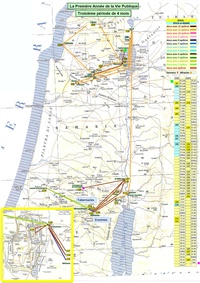
- 97. The call of Matthew. 128
- Matthew 9:9-13 | Mark 2:13-17 | Luke 5:27-32
- 97.1: Jesus reconciles two children disputing over figs. 97.2: The will to make peace in disputes. 97.3: “Matthew, come, follow Me.” 97.4: Matthew welcomes Jesus and his companions at his home. 97.5: Peter attacks Judas and is reproved by Jesus. 97.6: Meal with Matthew and his tax-collector friends. 97.7: To the scandalized Pharisees, why Jesus eats with sinners.
The last shepherds[edit | edit source]
- 98. Meeting with Mary Magdalene on the lake, and teaching to the disciples near Tiberias. 136
- Reconstructed calendar[1]: Tuesday, August 24, 27 (5 Elul 3787).
- 98.1: From Capernaum to Tiberias by water. 98.2: Turbulent encounter with Roman boats. 98.3: Jesus withdraws from the turmoil. 98.4: Judas recognized Mary of Magdala. 98.5: Quarrel between Peter and Judas. 98.6: Jesus wants to speak to his companions. 98.7: “You must be the salt of the earth and the light of the world.” 98.8: “I offer only one thing: holiness.” 98.9: “I swear, you will become my heroes.” 98.10: “The soul can die before the body.” 98.11: “Be humble, sincere, and discreet.” 98.12: “Do not be pagans nor uncompromising. Do not judge.” 92.13: “Father, hasten the hour of purification.”
- 99. In Tiberias at the home of Chuza. 146
- 99.1: Arrival at Tiberias, a new city “in the fashion of the pagans,” according to Peter. 99.2: Jonathan is absent, having gone to accompany Joanna, very ill. 99.3: He has already made Jesus known there as the Messiah. 99.4: Jesus promises Esther that Joanna will be healed. 99.5: “You’re more known here than in Nazareth,” regrets James of Alphaeus.
- 100. In Nazareth, at Alphaeus’s old and sick house. The life of an apostle is hardly easy. 152
- 100.1: Arranging the stay in the different houses. 100.2: Entry of a modest group into Nazareth. 100.3: Alphaeus, neighbor of Sarah, presents Jesus with his youngest child and advises him not to go to his uncle Alphaeus. 100.4: Jesus forces his way into the house. 100.5: He forces open the uncle Alphaeus’s room door, triggering his senile anger. 100.6: Worried, Peter and John arrive hastily. Altercation between Peter and Judas. 100.7: Jesus consoles Jude and James. 100.8: Others do it their way. 100.9: Mary arrives. Peter denounces Judas’s cynicism. 100.10: Jesus’s commentary and location of the following passage. 100.11: Are there still dissatisfied doctors who think the apostle’s life is or should be easy? 100.12: “My Mother knew no other unions nor children.”
- 101. Jesus questions his Mother about his disciples. 163
- 101.1: Jesus and Mary on a stone bench in the garden. 101.2: Jesus questions Mary about the apostles; Judas scares Mary. 101.3: “My College must represent the world in its diversity.”
- 102. Meeting with former shepherd Jonathan and healing of Joanna of Chuza. 166
- 102.1: Judas decides to return to Judea. 102.2: “James, have no scruples. Peter, be charitable.” 102.3: Jonathan arrives and worships the adored one. 102.4: He recounts Joanna’s prophetic dream. 102.5: Noisy departure for Cana. 102.6: Donkey ride spiced with Peter’s remarks. 102.7: Healing of Joanna. 102.8: Joanna invites Jesus and disciples to her house.
- 103. On Mount Lebanon, at shepherds Benjamin’s and Daniel’s. 174
- 103.1: Tensions between Tetrarch Philip and Herod Antipas. 103.2: Jesus’s prediction about future martyrs. 103.3: Lebanon and its riches. 103.4: How Jonas became Doras’s slave. 103.5: Warm meeting with Benjamin and Daniel.
- 104. Aava reconciled with her husband. News of Alphaeus’s death and Jonas’s ransom. 180
- 104.1: Andrew calls Jesus for help with a difficult case. 104.2: Peter cannot help following them through alleys. 104.3: The husband wants to repudiate his barren wife. 104.4: “I do what the Law says!” “No, it is an offense to God.” 104.5: Jesus blesses the reconciled who will have a son. 104.6: Joseph, son of Josep, brings three letters for Jesus. Mary’s letter: Alphaeus is dead. 104.7: Lazarus’s letter: “I ransomed Jonas from Doras.” Doras’s letter: “I want double, and Jesus must come get him.” 104.8: The Zealot pays. Decision to go to Nazareth despite everything.
- 105. In Nazareth after Alphaeus’s death. Simon, Jesus’s cousin, converts slowly. 190
- 105.1: Jesus is badly received except by children. 105.2: Meeting with Isaac of Yutta at the well. 105.3: Jesus’s condolences to Simon and Joseph. 105.4: “Do not hold grudges against your brothers Jude and James.” 105.5: They will honor Alphaeus’s tomb. 105.6: Grace always acts where there is the will to be just.
- 106. Jesus expelled from Nazareth and consoled by his Mother. Reflections on four contemplations. 195
- Luke 4:16-30
- 106.1: The Nazareth synagogue. 106.2: “The Spirit of the Lord is upon me.” 106.3: No prophet is well received in his hometown. 106.4: Jesus chased out of the village. 106.5: He has taken refuge in a nearby hamlet. 106.6: “I have enemies everywhere.” 106.7: “I will be absent for some time.” 106.8: Four contemplations to contemplate our pains. 106.9: Judas could only horrify my Mother. 106.10: “They thirsted for my blood.” 106.11: The changing crowd. 106.12: The apostles’ humanity! How heavy it is! 106.13: The pains preparing for the Passion.
- 107. Jesus with his mother at Joanna’s, Chuza’s wife. 202
- 107.1: Joanna offers to host Jesus’s mother. 107.2: Jonathan fetches the two Marys in Nazareth. 107.3: A warm welcome for Mary and Mary of Alphaeus.
- 108. Speech to the harvesters. The paralyzed child healed through the intercession of Jesus’s Mother. 205
- 108.1: Jesus stops at an elderly couple’s home. 108.2: The joy of having the Messiah for Mary and Anne. 108.3: At dusk, Jesus prepares to speak. 108.4: Fear of God, love, and jubilation. 108.5: Upright intention. 108.6: Love of God and neighbor. 108.7: Healing of a paralyzed child.
- 109. In the fields of Yokhanan and Doras. Jonas dies at Nazareth house. 212
- 109.1: Men like beasts of burden. 109.2: Peter speaks to four servants of Yokhanan. 109.3: Jonas told them about the Messiah in Jesus. 109.4: The apostles pull the plow instead of the laborers. 109.5: They have no hatred or complaints against God. 109.6: Doras has been cruel again to the dying Jonas. 109.7: Jesus gives them food and wine. 109.8: Doras’s servants confirm that Jonas is exhausted. 109.9: Doras shows off his wealth. 109.10: “I will leave after cursing you and your fields.” 109.11: Jesus at Jonas’s bedside. 109.12: Doras promises retaliation. 109.13: Jesus requisitions a Roman cart. 109.14: Publius Quintilianus is instructed. 109.15: Jonas dies in Joseph’s bed in Nazareth.
In Judea before communal life[edit | edit source]
- 110. At Jacob’s house near the Sea of Galilee. 227
- Reconstructed calendar[1]: Wednesday, October 6, 27 (19 Tishri 3788)
- 110.1: The Sea of Galilee. 110.2: Never confuse faith with outward acts. 110.3: “I delivered Doras to God’s justice. Me, Love, abandoned him.” 110.4: A shower forces seeking shelter. 110.5: Jacob recognizes Jesus. He tells him his misfortunes. 110.6: Jesus repairs his plow. 110.7: A frugal meal.
- 111. Meeting Solomon at the Jordan crossing. Parable of heart conversion. 234
- John 3:23-24
- 111.1: The Baptist took refuge near Samaria. 111.2: The ferryman Solomon is a Baptist convert. 111.3: He recognizes the Messiah in Jesus. 111.4: The parable on heart conversion. 111.5: Disciples question Jesus’s “hour.” 111.6: The Zealot explains to Peter. 111.7: “We will defend him, but we are weak men, Peter.” 111.8: Arrival near Jericho.
- 112. Judas surprised in Jericho. At Bethany, at Lazarus’s who introduces Martha. 239
- 112.1: Merchant Zacchaeus cannot tell Judas who the veiled woman selling jewels is. 112.2: Judas unexpectedly meets Jesus and company. 112.3: They arrive at Lazarus’s at Bethany. 112.4: Lazarus introduces Martha to Jesus. 112.5: And warns him against Doras. 112.6: “Martha, forgive your sister, she will heal.”
- 113. Return to Bethany after the Feast of Tabernacles. 246
- 113.1: Maria Valtorta must face the workload. 113.2: New vision: a meeting of friends at Lazarus’s. 113.3: Invitation from Joseph of Arimathea passed by Lazarus. 113.4: Nicodemus mistrusts Judas. 113.5: “Lazarus, Lazarus, you worry too much.”
- 114. Gamaliel and Nicodemus attend Joseph of Arimathea’s banquet. 248
- 114.1: Joseph of Arimathea treats his servants well. 114.2: He respectfully welcomes his guests. 114.3: He kept Lazarus despite his shame. 114.4: Nervous Lazarus greets Jesus as the Sanhedrin arrive. 114.5: The banquet starts with general conversation. 114.6: Debate over who is holier, the Baptist or Jesus? 114.7: At Gamaliel’s invitation, Jesus comments on the gift of miracles with Moses and Aaron. 114.8: Gamaliel awaits fulfillment of God’s promise in the form of a child. 114.9: “Give me the sign that you are the Expected One.”
- 115. Healing of a child injured by Alexander’s horse. Jesus chased from the Temple. 257
- 115.1: Soldier Alexander bursts into the Temple causing great scandal. 115.2: Jesus heals a child hurt by the horse’s hooves. 115.3: Temple people want to chase Jesus out. 115.4: But Jesus already has permission to speak there. 115.5: Alexander expresses admiration for Jesus.
- 116. At Gethsemane, disciples talk with Jesus about Gentiles and the “veiled woman.” Conversation with Nicodemus. 263
- John 3:1-21.
- 116.1: Curiosity of a centurion and a Roman lady. 116.2: “Who among you does not practice idolatry?” 116.3: A veiled woman keeps following us. 116.4: Nicodemus wanted to speak with Jesus in secret. 116.5: Sanhedrin accusations against Jesus. 116.6: “I leave Jerusalem for a second time.” 116.7: Nicodemus is reassured by the Zealot’s and John’s faith. 116.8: “To be born again of the Spirit.” 116.9: “How can you believe in the Spirit if you don’t believe in the incarnate Word?” 116.10: “I am the Light of the world.” 116.11: “Die to live. Die to give you the strength to die.”
- 117. Jesus at Lazarus’s before going to La Belle Eau. 275
- 117.1: Jesus and apostles approach Bethany. 117.2: At Bethany, Jesus is welcomed by Maximin and Marcella the servant. 117.3: To Jesus withdrawing from Jerusalem, Lazarus offers his house near Ephraim. 117.4: Martha will restore it to serve. 117.5: Jesus knows Lazarus’s secret charities. 117.6: The supernatural perfection he seeks will be rewarded.
Beginning of communal life, teachings on the Ten Commandments[edit | edit source]
- 118. Beginnings of communal life with the disciples at La Belle Eau and inaugural speech. 280
- Reconstructed calendar[1]: Tuesday, November 23, 27 (7 Kislev 3788)
- John 3:22-24.
- 118.1: The property of La Belle Eau. 118.2: Settling in and all kinds of reflections. 118.3: The steward sends provisions. 118.4: Jesus arrives for the meal. 118.5: A small crowd gathers in the courtyard. 118.6: Life is not existence. Existence is not life. 118.7: Duties towards this life.
- 119. Speeches at La Belle Eau: "I am the Lord your God." Jesus baptizes like John. 288
- John 3:22-24.
- 119.1: Newcomers spread legends about birth in Bethlehem. 119.2: One wants to heal, another to find forgiveness. 119.3: Jesus holds back a sinner who wants to flee and forgives his murders. 119.4: Speech: The Law and Grace. 119.5: God in conscience. 119.6: “I am the Liberator.” 119.7: Jesus baptizes and heals the gangrenous. 119.8: Expiation: tears too are water. 119.9: The apostles will baptize. Jesus will speak and heal. 119.10: Jesus will teach them to pray. 119.11: They will also perform miracles when less carnal.
- 120. Speeches at La Belle Eau: "You shall have no other gods before Me." 297
- 120.1: The assembled crowd in the large room because it is raining. 120.2: Omnipresence of the invisible God. 120.3: Idolatrous worship of false gods. 120.4: The strong God and the jealous God. 120.5: The great mercy of God. Make your hearts a heaven. 120.6: Enthusiasm. Healings. Alms.
- 121. Speeches at La Belle Eau: "You shall not take My Name in vain." The visit of Manaen. 302
- 121.1: Apostles nervous waiting for Herod’s milk brother and near the veiled woman. 121.2: The Zealot calms the dispute between Peter and Judas. 121.3: Peter sheepish and Judas tearful apologize before Jesus. 121.4: Jesus comments publicly on Judas’s troubled soul and reminds him of his love. 121.5: Conduct advice to Peter and the arrival of Manaen. 121.6: “Do not take My Name in vain.” 121.7: Hypocritical prayers are sacrileges. 121.8: This is what changes sacrilege into ritual: wanting to heal. 121.9: Jesus invites Manaen to stay who feels unworthy. 121.10: His horse is stabled under the shed.
- 122. Speeches at La Belle Eau: Honor your father and mother. Healing of a simple-minded person. 310
- John 3:25-36
- 122.1: Jesus alone on the Jordan bank. 122.2: John notes Judas’s good dispositions. 122.3: Jesus asks for more brotherly patience towards Judas. 122.4: Jesus recommends not leaving John alone with Judas. 122.5: Arrival of the large crowd. 122.6: A woman weeping among the sick. 122.7: Healing of a dazed son. 122.8: The reason for illnesses. 122.9: The Baptist sends people to Jesus. 122.10: “Love your neighbor as yourself.” 122.11: “Honor your father and mother.” 122.12: Parents’ duties. 122.13: Conversion of a son (Philip of Arbela) granted to his mother.
- 123. Speeches at La Belle Eau: You shall not commit impurity. The affront by five notables. 323
- 123.1: “Be patient.” 123.2: Apostles and crowd during rainstorm. 123.3: “Do not commit impurity.” 123.4: Fornications. 123.5: Aglaé’s sinful past on the path of repentance. 123.6: Peter confronted by five Temple emissaries. 123.7: Apostles come to support Peter. 123.8: The veiled woman harms you.
- 124. The veiled woman welcomed at "La Belle Eau." 332
- 124.1: Apostles repair the chimney and roof. 124.2: Peter wants to know where the veiled woman, who came to discreetly get supplies, lives. 124.3: For Jesus, the veiled woman is simply a soul. Judas knows where she stays. 124.4: Peter followed and contacted her. They collectively decide to offer her shelter. 124.5: Instruction not to go to her lodging. Actions are more effective than words.
- 125. Speeches at La Belle Eau: You shall keep the Feasts holy. Healing of a child with broken legs. 338
- 125.1: Beginning to heal a motionless child. 125.2: Teaching about Sabbath rest. 125.3: Honest work. 125.4: “If you have faith in the Father, everything will succeed for you, but faith like that of a child.” 125.5: Healing of little John as a living demonstration.
- 126. Jesus at La Belle Eau: “You shall not kill.” Doras dies. 343
- 126.1: Emmaus synagogue leader asks, on behalf of all, to be instructed. 126.2: “To measure guilt, consider circumstances preceding, preparing, justifying, explaining the fault itself.” 126.3: “By striking a man, one strikes God, his Father.” 126.4: “Where did I kill?” 126.5: “By what means did I strike?” 126.6: “Why did I strike?” 126.7: “How did I strike?” 126.8: “When did I strike?” 126.9: “The master who secretly kills his slave is like Cain killing Abel.” 126.10: Doras confesses, intervenes, and dies. Cleophas of Emmaus invites Jesus to his synagogue.
- 127. Speeches at La Belle Eau: “You shall not tempt the Lord your God.” Testimony of John the Baptist. 352
- John 3:25-36.
- 127.1: Arrival of Baptist’s disciples: Simeon, John, and Matthias. 127.2: The Baptist refused baptism to Doras. 127.3: What about Manaen and the veiled woman? 127.4: Baptist’s speech: He is only the forerunner. 127.5: Jesus recalls the Baptist’s pre-sanctification at the Visitation. 127.6: “You shall not tempt the Lord your God.” 127.7: Doras tempted God. 127.8: No need for miracles to believe in Jesus; his birth suffices.
- 128. Speeches at La Belle Eau: “You shall not covet your neighbor’s wife.” Healing of a young debauchee. 359
- 128.1: A young leper confesses his lust sin. 128.2: His grieving mother obtains his healing. 128.3: Speech: Adultery and lust are one. 128.4: Jesus hates lust more than leprosy. Multiple healings. 128.5: On his request, Judas will go to Jerusalem with the Zealot and John. 128.6: Mary comments on his suffering.
- 129. At La Belle Eau, Jesus heals a possessed Roman. 365
- 129.1: Andrew calls Jesus to a madman. 129.2: Jesus talks to a Roman about soul and God. 129.3: He casts out the demon from the sick man. 129.4: Pagans are enlightened. 129.5: “I came for all.” 129.6: “One of my messengers will come to you.” 129.7: Andrew is sent to the veiled woman on the path of repentance. Episode commentary.
- 130. Speeches at La Belle Eau: “You shall not bear false witness.” Little Asrael. 373
- 130.1: Three Pharisees from Galilee come to trouble the Master. 130.2: Testimony of Azarias in favor of Jesus and speech by James of Alphaeus. 130.3: He learned to speak this way from Mary and Jesus. 130.4: Jesus arrives with little Asrael who wants to be a missionary. 130.5: Speech: “You shall not bear false witness.” 130.6: Oppose them with frankness and simplicity. 130.7: Little Asrael wants to speak like Jesus.
- 131. Speeches at La Belle Eau: “You shall not steal or desire what belongs to another.” The sin of Herod. 380
- 131.1: “He who always desires more kills his peace and enjoys nothing.” 131.2: Envy separates from God and unites with Satan who first envied others’ goods. 131.3: Birds testify to trust in God. 131.4: The case of Herod Antipas. 131.5: The case of a prostitute. 131.6: Jesus favors a widow burdened with children and heals some.
- 132. Closing speech at La Belle Eau. Announcement to Simon Peter of his spiritual primacy. 384
- 132.1: Announcement of the Feast of the Purification and the Decalogue’s importance. 132.2: “Destroy pagan temples that are within you.” 132.3: “Purify your Temple.” The De profundis. 132.4: Prayer of repentance (the Miserere). 132.5: The year of grace has come. 132.6: They will celebrate the Dedication (Hanukkah) away from home. 132.7: Jesus, born on 25 Kislev, is the true purifier. He announces Peter’s spiritual primacy. 132.8: His descendants will be spiritual and he will know how to speak. Jesus charges him to sell a ring.
End-of-year feasts[edit | edit source]
- 133. Andrew as ideal model of the priest. A letter from Mary. Jesus forced to leave La Belle Eau. 393
- Reconstructed calendar[1]: Thursday, December 9, 27 (23 Kislev 3788)
- 133.1: Dialogue of Jesus with discreet Andrew whom he thanks for drawing a heart. 133.2: Andrew, model of the priest. 133.3: John, Judas, and the Zealot return from Jerusalem, loaded with gifts. 133.4: Mary’s letter: news from Galilee. Her grief for being away from her son. Echoes of his ministry. Joseph was poorly received in Jerusalem. 133.5: Threatening news from Jerusalem. 133.6: The Galileans unpack their gifts. 133.7: Jesus decides to leave immediately. Promise to the veiled woman to return.
- 134. Healing of Jerusa at Docco. 403
- 134.1: Arrival at Docco seeking Marianne’s house, Jerusa’s mother-in-law. 134.2: Marianne and grandchildren receive Jesus. 134.3: Healing of Jerusa, mother of seven children. 134.4: Judas will go shopping abundantly to support the poor family.
- 135. Arrival at Bethany. Mary Magdalene listens to a speech by Jesus. 406
- 135.1: Jesus arrives at Bethany. 135.2: Jesus clarifies to Lazarus who thinks he avoided his house due to Mary Magdalene’s presence. 135.3: He arrives at the Zealot’s house. 135.4: Jesus talks with Lazarus, who reports the Sanhedrin’s fear. Jesus makes flowers of good bloom on mud. 135.5: What happens in the new citywoman’s house in Bethany. 135.6: Speech: good is stronger than evil. 135.7: Mary Magdalene hides to listen. The wicked’s bad calculations and sinners’ misery. 135.8: “Mary Magdalene? Let her be.”
- 136. Dedication feast at Lazarus’s house. Prediction on souls resurrecting by their own will and evocation of Jesus’s birth. 416
- 136.1: Jesus meditates alone in the garden. 136.2: Conversation with the Zealot: “I wait for sinners’ goodwill.” Variety of redeemed souls. 136.3: Lazarus introduces five present shepherds in new clothes. 136.4: They all enter the richly decorated banquet hall. 136.5: Shepherds recall Nativity fragments. Apostles want to know more. 136.6: Jesus’s account: The Immaculate Conception of Mary and the Annunciation. 136.7: “And Joseph’s conduct?” 136.8: Shepherds’ account: angels’ announcement, their visit to the newborn, visit of the Magi. 136.9: Jesus’s account on Zacharias’s conduct. 136.10: Jesus’s loss at the Temple. 136.11: Matthew will memorize these accounts by heart. The feast ends with a psalm.
- 137. Return to "La Belle Eau" and conflict with Pharisees who assaulted and chased the veiled woman. 429
- 137.1: Jesus talks with Andrew: “The veiled woman had to flee.” 137.2: Satisfaction of a true apostle. 137.3: Pharisees chased the woman. 137.4: Despite danger, Jesus will go to the house. 137.5: The Temple delegation drives him out and curses him. 137.6: Jesus will leave and return to Galilee.
- 138. Farewell to La Belle Eau steward and synagogue leader Timon, who becomes a disciple. 436
- 138.1: The steward acknowledges Aglaé’s honesty. Jesus receives the gold bracelet and blesses the family. 138.2: Jesus does not use violence, a poor human means. 138.3: Arrival at the synagogue leader’s house. 138.4: Jesus invites Timon to be his disciple. Farewell to Timon’s mother.
- 139. On the Emmaus hills. Judas’s character and the qualities of the good. 441
- 139.1: Judas wants Jesus to return to Kerioth. 139.2: Judas wants to understand his contradictions. “You are simply disordered,” Jesus explains. 139.3: Temptations. “Do not isolate yourself.” 139.4: To Peter who joins him: The need for order and charity. 139.5: Jesus transforms the animal man into the spiritual man.
- 140. At Emmaus, at Cleophas, the synagogue leader’s house. A case of incest. End of the first year. 446
- 140.1: Old Cleophas comes out to meet Jesus. 140.2: He invited the town notables who arrive. 140.3: Guests question: “What is your doctrine?” 140.4: Incest judged by Jesus. Royal incest versus involuntary incest. 140.5: The Temple verdict brought: “Unfortunate Joseph has been excommunicated.” 140.6: Jesus will comfort him. “I am Mercy.” 140.7: End of the first year of public life. May the Work become known.
Summary of the second year of Jesus's public life (beginning)[edit | edit source]
- The wording of subparts and dating are based on personal research intended to better understand the episode content and do not bind the publisher.
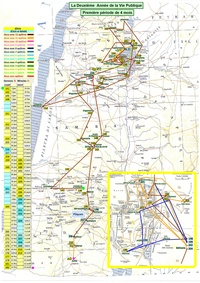
- 141. On the way to Arimathea with disciples and Joseph of Emmaus. 455
- Reconstructed calendar[1]: Tuesday, January 4, 28 (19 Tebeth 3788)
- 141.1: Yes, Joseph of Emmaus will accompany the apostles. 141.2: My main works are healing hearts. 141.3: The miracle over the flesh is divine power. The redemption of spirits is Jesus Christ’s work. 141.4: Joseph will be entrusted to Isaac.
- 142. On the way with the Twelve to Samaria. 458
- John 4:1-4.
- 142.1: Jesus’s disciples and John the Baptist’s disciples. 142.2: Only God has the right to have followers. 142.3: Baptism of the Spirit. 142.4: After the Master’s year, comes the Savior’s.
Cycle of the Samaritan woman[edit | edit source]
- 143. Photinaï, the Samaritan woman. 461
- Reconstructed calendar::[1]: Wednesday, January 5, 28 (20 Tebeth 3788)
- John 4:5-38.
- 143.1: Apostles leave Jesus alone at a well. 143.2: Dialogue with the Samaritan: well water and Jesus’s living water. 143.3: Photinaï’s dissolute life. 143.4: The hour will come when spiritual worship will be rendered in a spiritual Kingdom. 143.5: To amazed apostles, the sower and harvesters.
- 144. The Samaritans invite Jesus to Sychar. 467
- John 4:39-44.
- 144.1: Samaritans welcome Jesus who does not despise them. 144.2: “Is it true you are the Christ?” 144.3: “Of whom and where were you born?” 144.4: The case of schismatics.
- 145. The first day in Sychar. 471
- John 4:39-44.
- 145.1: Apostles’ embarrassment in the public square. 145.2: Advice to a father whose daughter ran away. 145.3: To a mother wanting to marry her brother-in-law. 145.4: To a man wanting to settle in Antioch. 145.5: Samaritans and Jews, two daughters of the same mother, according to Ezekiel. 145.6: “Come to Me. I do not repel you.”
- 146. The second day in Sychar. Farewell to the Samaritans. 475
- John 4:39-44.
- 146.1: The unknown God felt by all. 146.2: Baruch’s prayer of repentance. The fate of Samaritans and Jews. 146.3: The crowd expresses its attachment to Jesus.
- 147. Healing of a woman from Sychar and Photinaï’s conversion. 478
- 147.1: Apostles criticize the Master. 147.2: A man suspicious to the apostles brings his wasted wife. 147.3: Jesus heals her. “How much you lack!” 147.4: Arrival of Photinaï and her will to convert.
- 148. Jesus visits John the Baptist near Hennon. 483
- 148.1: Jesus arrives at the Baptist’s cave. 148.2: “I came to thank you.” The Baptist entrusts his disciples to Jesus. 148.3: “Live and die in peace for your disciples.”
- 149. John the Baptist’s heritage. The hour of death for the apostles. God’s love in John. 486
- John 4:44
- 149.1: The Zealot invites Jesus to see the lepers at home. 149.2: Jesus calls Peter to spiritual progress. 149.3: “You promised to teach us your prayers.” 149.4: “More precious than silver, is holiness.” 149.5: The difficult future of the apostles. 149.6: “Jesus, increase your love.”
Cycle of the female apostolate[edit | edit source]
- 150. In Nazareth, at his Mother’s who must follow her Son. 490
- Reconstructed calendar[1]: Friday, January 7, 28 (22 Tebeth 3788).
- 150.1: Meeting Mary who is helped by Simon and Joseph. 150.2: She listens to her son’s pain whom she now wants to accompany.
- 151. At Cana, at Suzanne’s house who will become a disciple. The royal officer. 492
- John 4:46-54.
- 151.1: Jesus heals the royal officer’s son. 151.2: Suzanne’s husband implores healing for his wife. He is ready to give her up for this. 151.3: Jesus must ask women disciples from husbands and fathers. Suzanne is healed after her husband’s agreement.
- 152. Mary Salome welcomed as disciple. 495
- 152.1: The joy of James and John. 152.2: Mary Salome asks to follow Jesus who tests her motivation. 152.3: Jesus welcomes her among women disciples.
- 153. Disciples’ wives serving Jesus. 497
- 153.1: Peter regrets that his wife does not follow Jesus. Others describe how wives, mothers or daughters serve Jesus. 153.2: Andrew points out his brother’s authoritarian character. Everyone laughs. 153.3: Characteristics of women disciples’ apostolate.
- 154. At Caesarea Maritima, speech to galley slaves and meeting Claudia Procula. A fatigue of the "spokesman." 499
- 154.1: Jesus goes to the port near a military galley. 154.2: He begins his speech there. 154.3: Intervention of Publius Quintilianus. 154.4: Jesus continues and listeners increase. 154.5: Appeal to pity. Jesus’s mission to the afflicted. 154.6: Publius is captivated and supervises food distribution to galley slaves offered by Jesus. 154.7: Jesus talks to Claudia Procula about her soul. 154.8: He praises pagans before the apostles. 154.9: Maria Valtorta’s discouragement and Jesus’s commentary on spiritual weariness.
- 155. At Caesarea, healing of a little Roman girl and quarrel about contact with pagans. 507
- 155.1: Instruction for the consecrated. 155.2: Jesus addresses apostles’ aversion to pagans: “What if you had been born a pagan?” 155.3: A lesson of universal brotherhood given by unbiased children. 155.4: “Would you accept to heal the dying daughter of Claudia’s friend?” 155.5: Jesus heals the girl in a way that astonishes the Proconsul’s doctor. 155.6: Three Pharisees reproach him for approaching strangers (which they do themselves). 155.7: Lying ministers of a Law of Truth. It’s shameful! 155.8: “I make no distinction among men.” 155.9: The three hostile Israelites flee under a hail of reproaches.
- 156. Annalia, the first consecrated virgin. 515
- 156.1: Mary warns Jesus that someone awaits him. 156.2: Mary’s room. 156.3: Annalia hesitates to confide. She recalls her healing. 156.4: Her decision to suspend her marriage for Jesus’s love, her Savior. 156.5: Offers her life as sacrifice to keep this grace. 156.6: Not to attend Jesus’s death who gave her life. 156.7: Jesus entrusts Annalia to Mary. Apostles’ curiosity.
- 157. The new mission of women in the discourse to the disciples at Nazareth. 521
- 157.1: Presence of a deeply afflicted Martha among women disciples. 157.2: “My disciples will be united under one name and one sign: Christians.” 157.3: “Ask yourselves if you can defy the world’s hatred for me.” 157.4: The example of Annalia. 157.5: “You can do much among your peers and toward the Lord’s ministers.” 157.6: “You will educate yourselves by listening to me and even more by listening to my Mother.” 157.7: Mary, guide of souls to God. 157.8: Friends, take example on women.
- 158. On the Sea of Galilee with Joanna of Chuza. 529
- 158.1: In a boat on the lake in spring amid flowering shores. 158.2: Jesus’s eloquent silence before nature. 158.3: “Lord, would you disdain to visit my pagan friends?” 158.4: Jesus will meet Romans at Joanna’s. 158.5: Farewell of Jesus to Joanna.
- 159. Speech at Gerghesa on sincerity in faith. The answer about fasting to John the Baptist’s disciples. 533
- Matthew 9:14-17 | Mark 2:18-22 | Luke 5:33-39.
- 159.1: Speech: Human thought is changeable. 159.2: Hypocritical or mixed declarations of faith. 159.3: “I want the miracle of your sanctification.” 159.4: Dialogue on contact with Gentiles with John the Baptist’s disciples. 159.5: Answer on the appropriateness of fasting. 159.6: “No one puts new wine into old wineskins.” 159.7: “Later you will come to Me.”