


Samaria (Region)
.webp)
Located between Galilee to the north and Judea to the south. Tensions were high between the Samaritans and the Jews.
Description[edit | edit source]
The region of Samaria[edit | edit source]
Maria Valtorta compares the landscape of Samaria with that of her own region in Italy.
"The road tends to descend to the valley, but it climbs now and again to cross other hills from the top of which one commands the land of Samaria with its lovely olive-groves, corn fields, vineyards, watched over from the hill crests by woods of oak and other forest trees, which must be protective against the winds that blowing through the gorges are inclined to create whirlwinds damaging cultivations. This area reminds me very much of certain spots in our Apennines, around Mount Amiata, where one can contemplate at the same time the flat cultivations of cereals in the Maremma and the bright hills and majestic mountains that rise higher inland. I do not know what Samaria is like now. It was very beautiful in those days."[1]
But even more than the relief, the visionary observes and describes some specific features of Samaria and its inhabitants which should draw the attention of ethnologists.
"In Samaria there are customs which differ from those of other places, both with regards to garments and many other things. And one is the large number of dogs, unlike other places, and it surprises me as I was surprised at the presence of pigs in the Decapolis. Perhaps there are many dogs because there are many shepherds in Samaria and there are probably many wolves in the mountains which are so wild. There are many dogs also because I see that in Samaria the shepherds are generally alone, at the most with a boy, each one pastures his own flock, whereas elsewhere there are mostly many looking after large herds of rich people. It is a fact that here each shepherd has his dog or more dogs according to the number of sheep of his flock. Another characteristic are the donkeys, almost as tall as horses, they are robust, fit to climb these mountains with a heavy load on the pack-saddle, also big logs, for I see them coming down from these wonderful mountains covered with age-old woods."[2]
The city of Samaria[edit | edit source]
The city of Samaria (Sebaste) was the capital of the kingdom of Israel in the 9th century BCE, and gave its name to the surrounding territory. The city was built on a hill, 11 km northwest of Shechem, by Omri, king of Israel, who named it after Shemer, the man from whom he had acquired the hill.[3] Destroyed several times, the rebuilding of the city, undertaken by Pompey, was completed by Herod the Great, who named it Sebaste (Augusta) in honor of the emperor.
It is briefly mentioned in the work.[1]
Notable events[edit | edit source]
- Jesus finds refuge there, at Ephraim, before His Passion.[4]
- He meets Photina, the Samaritan woman there[5] and stays for a few days at Sychar.
- Samaria hosts John the Baptist after his first arrest. "Does the Baptist no longer baptise here?" - "No, he doesn’t. He is at the border with Samaria."[6]
- The ten lepers are healed there.[7]
Its name[edit | edit source]
The name "Samaria" (Samareia in Greek) finds its origins in biblical Hebrew and would mean Those who guard. Indeed, in Hebrew, it is written "שֹׁמְרוֹן" (Shomron). The etymology of this name is "שמר" (shamar), which means "to guard" or "to protect."
Where is it mentioned in the work?[edit | edit source]
Learn more about this place[edit | edit source]
The region of Samaria is bounded to the north by the Jezreel Valley, to the east by the Jordan River, to the west by the Plain of Sharon and Mount Carmel, and to the south by the mountains of Jerusalem.
The deacon Philip preached the Gospel there.[8]
Gallery[edit | edit source]
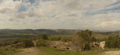
Landscape of Samaria, Sebaste, 2023.

Explore[edit | edit source]
- 32° 08’ 35’’ N / 35° 15’ 38’’ E /
- +350/1000m
Notes and references[edit | edit source]
Article partially based on the Geographical Dictionary of the Gospel, by Jean-François Lavère.
- ↑ 1.0 1.1 GRM 193.3.
- ↑ GRM 483.1.
- ↑ 1 Kings 16:24.
- ↑ GRM 551.9 | John 11:54.
- ↑ GRM 143.2 | John 4:3-38.
- ↑ GRM 111.1.
- ↑ GRM 483.7 [ Luke 17:11-19.
- ↑ Acts 8:5.